"Why Digital Marketing Matters for Modern Businesses"
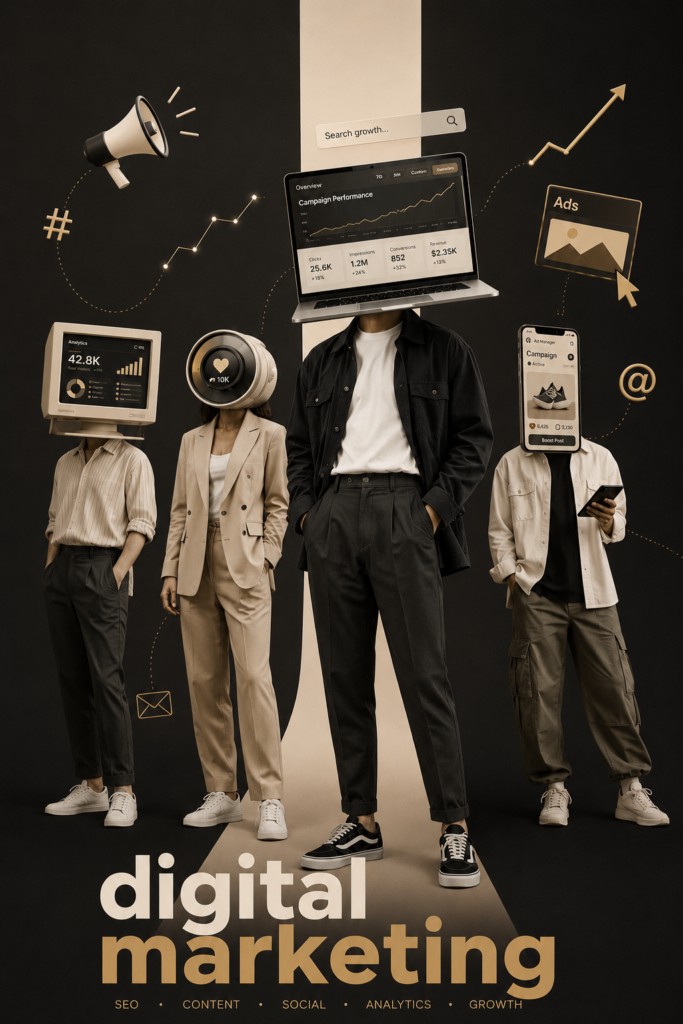
In today’s fast-moving digital world, having a strong online presence is no longer optional for businesses. Customers spend a significant amount of time online searching for products, comparing services, reading reviews, and interacting with brands. This makes digital marketing one of the most powerful ways for businesses to connect with their target audience and build long-term growth.Digital marketing allows businesses of all sizes to promote their products and services through channels such as search engines, social media, websites, email, content, and online advertising. With the right strategy, businesses can reach potential customers, build trust, increase visibility, and generate measurable results.
What Is Digital Marketing?
Digital marketing refers to promoting a business, product, or service through digital channels. Unlike traditional marketing methods such as newspapers, television, and billboards, digital marketing allows businesses to communicate with their audience directly through online platforms.Some of the most common digital marketing methods include:
Search Engine Optimization (SEO)
Social Media Marketing
Content Marketing
Search Engine Marketing (SEM)
Pay-Per-Click Advertising (PPC)
Email Marketing
Influencer Marketing
Website Marketing
Online Reputation
ManagementEach method has a different purpose, but they can work together to create a complete digital marketing strategy.
Why Is Digital Marketing Important?

Digital marketing has changed the way businesses communicate with customers. A business can now reach people across different locations, understand their interests, and create personalized marketing campaigns.
Here are some of the major reasons why digital marketing is important for modern businesses.
1. Helps Businesses Reach the Right Audience
One of the biggest advantages of digital marketing is audience targeting. Businesses can identify their ideal customers based on factors such as age, location, interests, online behavior, and search intent.
For example, a local restaurant can promote its services to people living nearby, while an online store can reach customers across different cities or countries.
This targeted approach helps businesses spend their marketing budget more effectively and reach people who are more likely to become customers.
2. Builds Strong Brand Awareness
Customers are more likely to choose a brand they recognize and trust. Digital marketing helps businesses stay visible in front of their target audience through consistent content, social media activity, search results, and advertising.
A strong digital presence can make a business easier to discover and remember.
Brand awareness is not created overnight. It requires consistent communication, valuable content, professional visuals, and a clear brand identity.
3. Increases Website Traffic
A business website is often the center of its online presence. Digital marketing strategies can help bring more visitors to a website.
SEO can improve organic search visibility, social media can generate referral traffic, and paid advertising can attract targeted visitors.
More relevant traffic creates more opportunities for businesses to generate enquiries, sales, bookings, or other conversions.
4. Improves Search Engine Visibility Through SEO
Search Engine Optimization, commonly known as SEO, helps websites appear more prominently in search engine results.
When people search for products, services, or information related to a business, appearing in relevant search results can increase the chances of receiving organic traffic.
SEO can involve:
Keyword research
Website optimization
High-quality content
Technical SEO
Internal linking
Mobile optimization
Improving website speed
Building online authority
SEO is a long-term strategy, but it can provide sustainable visibility when implemented effectively.
5. Creates Better Customer Engagement
Digital marketing gives businesses opportunities to communicate directly with their audience.
Social media comments, messages, emails, website forms, and online communities allow customers to interact with brands and ask questions.
This two-way communication can help businesses understand customer needs and improve their products or services.
Instead of simply promoting a product, businesses can create conversations and build relationships with their audience.
6. Social Media Helps Brands Connect With Customers
Social media platforms have become an important part of digital marketing. Businesses can use social media to showcase products, share educational content, tell their brand story, and communicate with customers.
Successful social media marketing is not simply about posting every day. It involves understanding the target audience and creating content that provides value.
Different types of content can include:
Educational posts
Short-form videos
Product demonstrations
Customer testimonials
Behind-the-scenes content
Infographics
Industry tips
Promotional campaigns
Consistent and valuable content can help a brand build an engaged online community.
7. Content Marketing Builds Trust
Content marketing focuses on creating useful information for a target audience.
A business can publish blog posts, guides, videos, case studies, tutorials, and other resources to answer customer questions and solve problems.
For example, a digital marketing agency might publish an article about improving website visibility. A potential customer searching for that information may discover the agency through the article.
When businesses consistently provide useful information, they can demonstrate their knowledge and build credibility.
8. Paid Advertising Provides Faster Reach
Organic marketing strategies can take time to produce results. Paid advertising can help businesses reach a targeted audience more quickly.
Platforms such as search engines and social media offer advertising options that allow businesses to target specific audiences.
Paid campaigns can be used to achieve different goals, including:
Website traffic
Lead generation
Product sales
App downloads
Brand awareness
Event registrations
The key to successful paid advertising is not simply spending more money. Campaigns need relevant targeting, strong creative content, compelling offers, and continuous optimization.
9. Digital Marketing Is Measurable
One of the biggest benefits of digital marketing is the ability to track performance.
Traditional marketing can sometimes make it difficult to determine exactly how many people interacted with an advertisement. Digital platforms provide detailed performance data.
Businesses can track metrics such as:
Website visitors
Click-through rates
Engagement
Leads
Conversions
Cost per click
Return on advertising spend
Customer acquisition cost
This data helps marketers understand which strategies are working and where improvements are needed.
10. Helps Businesses Make Better Decisions
Data-driven marketing allows businesses to make decisions based on actual customer behavior rather than assumptions.
For example, if a particular social media campaign receives high engagement and generates many website visits, the business can analyze what made the campaign successful.
Similarly, if an advertising campaign is generating clicks but very few conversions, marketers can investigate the landing page, audience targeting, offer, or messaging.
This continuous process of testing and improvement can make marketing more effective.
11. Provides Opportunities for Small Businesses
Digital marketing is not only useful for large companies. Small businesses can also compete online by developing a focused and creative strategy.
A small business can use local SEO, social media, content marketing, email marketing, and targeted advertising to reach potential customers without requiring the massive budgets traditionally associated with large-scale advertising.
A clear niche, strong customer understanding, and consistent online presence can help smaller businesses build visibility and credibility.
12. Builds Long-Term Customer Relationships
Digital marketing is not only about getting new customers. It is also about maintaining relationships with existing customers.
Email marketing, social media, personalized content, loyalty campaigns, and helpful customer communication can keep customers connected with a brand.
A satisfied customer may return in the future and recommend the business to others.
Building customer relationships can therefore contribute to long-term business growth.
13. Mobile Marketing Is More Important Than Ever
People increasingly use smartphones to search for information, communicate with businesses, shop online, and consume content.
This means businesses need to make sure their websites and digital campaigns work well on mobile devices.
A mobile-friendly website should be:
Easy to navigate
Fast to load
Simple to read
Easy to interact with
Optimized for different screen sizes
A poor mobile experience can cause visitors to leave a website before completing an action.
14. Digital Marketing Supports Business Growth
When different digital marketing strategies work together, they can create a strong customer journey.
For example, a potential customer may first discover a brand through social media. Later, they may search for the brand on Google, visit the website, read a blog post, and eventually make a purchase.
This demonstrates why businesses should not always rely on a single marketing channel.
A combination of SEO, content, social media, email, and paid advertising can create multiple opportunities for customers to discover and interact with a brand.
How to Create an Effective Digital Marketing Strategy
A successful digital marketing campaign begins with a clear strategy.
Step 1: Understand Your Target Audience
Before creating content or launching advertisements, businesses should understand who their customers are.
Consider their:
Needs
Problems
Interests
Location
Buying behavior
Online habits
The better you understand your audience, the more relevant your marketing can become.
Step 2: Set Clear Marketing Goals
Every campaign should have a specific objective.
For example:
Increase website traffic
Generate more leads
Increase online sales
Improve brand awareness
Grow social media engagement
Clear goals make it easier to measure success.
Step 3: Choose the Right Channels
Not every business needs to use every digital platform.
The right channels depend on the target audience and business objectives. A B2B company may focus heavily on professional networks and search marketing, while a visual consumer brand may benefit strongly from social media and video content.
Step 4: Create Valuable Content
Content should provide a reason for people to pay attention.
Instead of constantly promoting products, businesses should educate, entertain, inspire, or help their audience.
Useful content can create trust and encourage people to engage with the brand.
Step 5: Monitor Performance
Digital marketing should be continuously monitored.
By reviewing analytics and campaign performance, marketers can identify successful strategies and areas that need improvement.
Step 6: Test and Optimize
There is rarely one perfect marketing strategy from the beginning.
Successful marketers test different headlines, images, audiences, content formats, keywords, and offers.
The results can then be used to improve future campaigns.
Common Digital Marketing Mistakes to Avoid
While digital marketing offers many opportunities, businesses can make mistakes that reduce their results.
Lack of Strategy
Posting content or running advertisements without a clear objective can waste time and money.
Ignoring the Target Audience
Content should be created for a specific audience rather than trying to appeal to everyone.
Inconsistent Branding
Using different messages, styles, or visuals across platforms can make a brand appear less professional.
Focusing Only on Sales
Customers do not want to see promotional content all the time. Educational and valuable content can help build stronger relationships.
Not Measuring Results
Without tracking performance, it becomes difficult to understand whether a campaign is successful.
The Future of Digital Marketing
Digital marketing continues to evolve as technology and customer behavior change. Artificial intelligence, automation, personalization, short-form video, voice search, and data analytics are influencing the way businesses communicate with their audiences.
However, the core principles remain the same: understand your audience, provide value, build trust, and continuously improve.
Businesses that adapt to changing customer expectations and use digital tools effectively can create stronger connections with their audiences.
Final Thoughts
Digital marketing has become an essential part of modern business growth. It gives businesses the ability to reach targeted audiences, build brand awareness, communicate with customers, increase website traffic, and measure marketing performance.
Whether you are a small local business, an online store, a startup, or an established company, having a strong digital marketing strategy can create valuable opportunities.
The most successful digital marketing is not simply about being visible online. It is about being visible to the right people, at the right time, with the right message.
With a combination of creativity, strategy, data, and consistency, businesses can use digital marketing to build a stronger online presence and achieve sustainable growth.
Ready to grow your business online? Start with a clear strategy, understand your audience, create valuable content, and keep improving your digital presence.